
Ultrasound training for nurses: the importance of practice
Nurses occupy a strategic position in the care pathway, often on the front line with patients. To meet the challenges of rapid diagnosis and a smooth care pathway, their skills must be expanded to areas previously reserved for doctors. Among these skills, ultrasound is now emerging as a major lever.
Indeed, diagnostic errors directly impact the quality of care, the speed of treatment, and patient safety. Integrating ultrasound into nursing practice enriches clinical examination, increases autonomy, and guides therapeutic decisions more effectively. Thanks to tools such as the echOpen portable ultrasound probe, nurses can now access this technology easily and efficiently, benefiting from expanded and accelerated access to care.
Why is ultrasound a key skill for nurses?
Faced with medical deserts, overcrowded emergency rooms, and long wait times for conventional imaging exams, access to early diagnosis is becoming a key issue. A nurse trained in ultrasound can intervene at the front line, particularly in primary care. They can visualize a vessel, detect effusion, or guide a procedure with an appropriate protocol, limiting diagnostic delays and facilitating patient referral.
The expansion of nursing roles, whether in advanced practice or enhanced autonomy, calls for new clinical skills. First-line imaging, particularly ultrasound, is becoming a natural extension of nursing practice. It allows for a more in-depth assessment of the patient's condition and enhances clinical decision-making capabilities.
Point-of-care ultrasound( POCUS ), or bedside ultrasound, is part of this optimization approach. As a tool for guidance, triage, or monitoring, it allows nurses to quickly adjust care. In hospitals, community care, or nursing homes, this type of ultrasound improves the fluidity of the care pathway and the relevance of the procedures prescribed.
How nurses can train in ultrasound
Theory with ultrasound training for nurses
Several ultrasound training courses for nurses have been developed in France in recent years in response to the increasing skills required in this profession. These courses may be offered by continuing education institutes, universities, and accredited private organizations. They are often aimed at advanced practice nurses (APNs), emergency nurses, and professionals working in contexts of increased diagnostic autonomy.
The programs for these training courses generally cover the fundamentals of ultrasound: ultrasound physics, probe handling, reading echogenic structures, ultrasound semiology, basic protocols (FAST, E-FAST), as well as locating organs such as the lungs, heart, liver, and bladder. The goal is to equip nurses with solid clinical skills, enabling them to perform targeted and clinically relevant examinations. The modules often include an introduction to ultrasound guidance, particularly for technical procedures such as punctures and IV placement.
Practice with ultra-portable equipment: the echOpen ultrasound probe
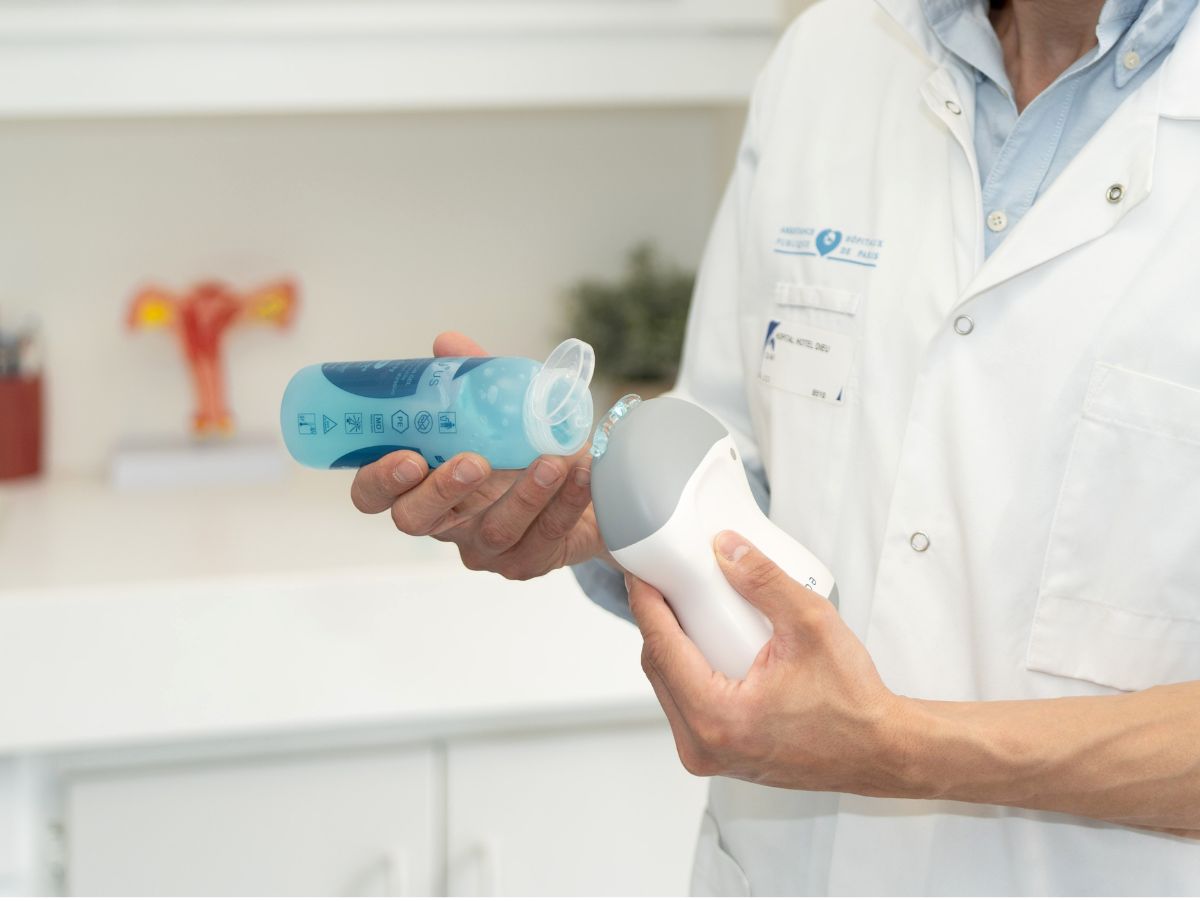
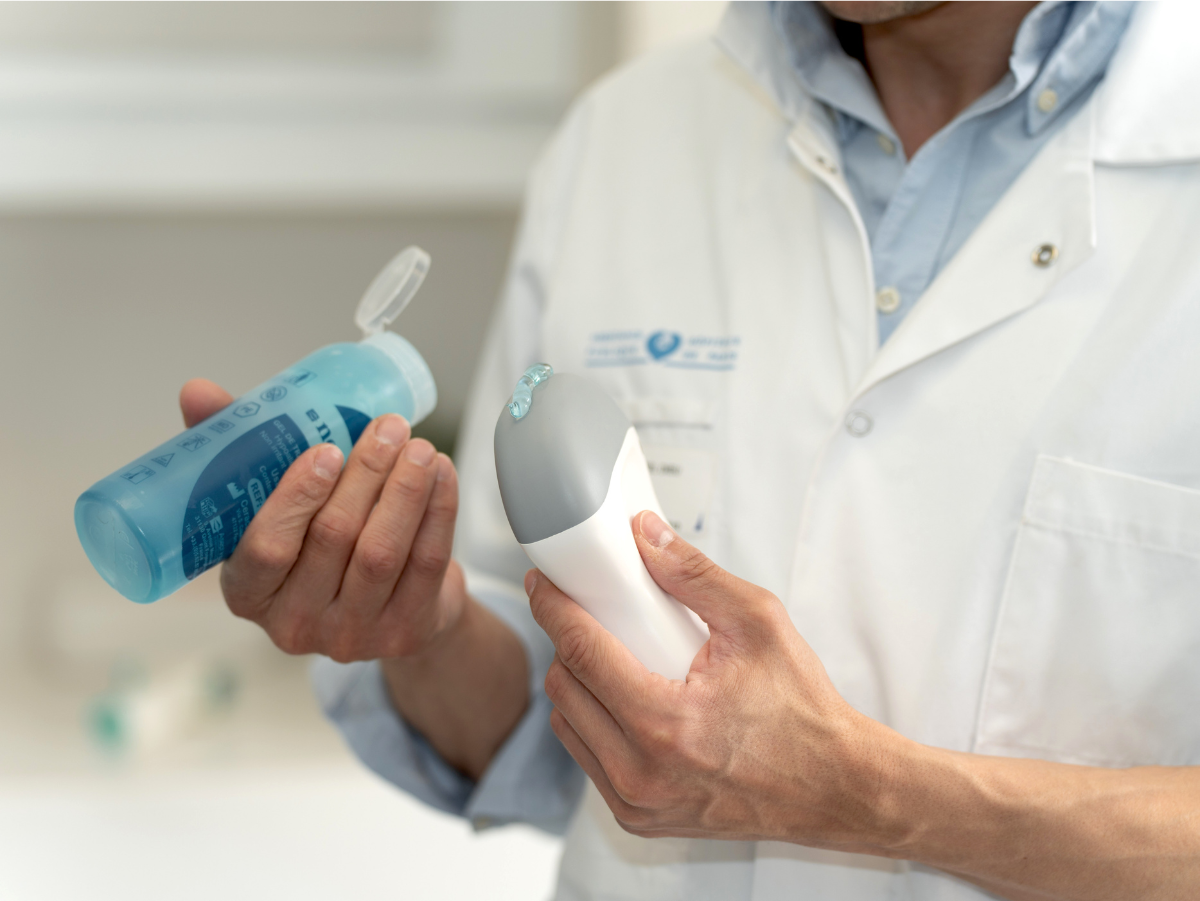
Ultrasound training for nurses cannot be complete without regular hands-on practice. In this context, the echOpen portable ultrasound probe plays a key role. Lightweight, connected to a smartphone, with a full day’s battery life, and extremely accessible, this tri-frequency probe fits in a pocket. It allows nurses to perform exams on the go, in the clinic, at home, and in emergency situations.
Let's take the example of a nurse in a nursing home faced with a patient presenting with sudden dyspnea. Using the echOpen probe, they can quickly check for pleural effusion, cardiac overload, or bladder retention. This ultrasound approach improves the quality of diagnostic guidance while avoiding unnecessary hospitalizations. It fits seamlessly into daily clinical practice, making ultrasound imaging as accessible as the stethoscope.
Training nurses in ultrasound: a cost reduction for the healthcare system?
Training nurses in clinical ultrasound is not just a matter of individual skill: it is also a performance lever for the healthcare system. A simple ultrasound scan, performed at the right time, can avoid costly imaging tests, medical transport, and even unnecessary hospitalization. By referring patients more accurately,ultrasound nurses help to relieve pressure on emergency departments, reduce waiting times for care, and optimize resources.
Discover our study on the impact and medical and economic benefits of the echOpen probe for bladder detection in nursing homes!
This approach also helps to control healthcare spending by strengthening outpatient care and limiting redundant procedures. In line with the principle of providing appropriate care, the development of ultrasound training for nurses is fully in line with a policy of efficiency and quality.