
5 key uses of clinical ultrasound in internal medicine
Clinical ultrasound—or POCUS (Point-of-Care Ultrasound)—is now an essential tool in internal medicine. Accessible, fast, and non-invasive, it helps refine clinical reasoning at the patient's bedside and improves decision-making in often complex situations.
In a department where symptoms are varied and diagnoses can sometimes be tricky, ultrasound becomes a real extension of the clinical examination.
Here are five key uses that are transforming the daily practice of internists.
1. Investigate dyspnea or desaturation within seconds
Dyspnea is one of the most common reasons for consultation in internal medicine. Pulmonary ultrasound allows for rapid differentiation between several diagnoses:
- Water overload (diffuse B lines)
- Infectious pneumopathy (consolidations, focal B lines)
- Pleural effusion
- Pneumothorax (elimination of pleural sliding)
With just a few scans, the internist obtains crucial information to adapt oxygen therapy, adjust diuretics, or initiate additional imaging.
2. Assess hemodynamic status and blood volume
Volume management is a daily challenge: elderly patients, patients with heart failure, malnourished patients, patients on diuretics, or patients with sepsis.
POCUS enables dynamic assessment thanks to:
- analysis of the inferior vena cava,
- the study of ventricular filling,
- checking for signs of congestion (pulmonary, hepatic, renal).
This approach limits filling errors, optimizes treatments, and reduces iatrogenic risks.
3. Check for effusion (pleural, pericardial, abdominal)
Effusions are common in internal medicine, whether they are related to heart failure, cirrhosis, neoplasia, or infection.
Ultrasound allows:
- to confirm their attendance promptly,
- to assess the quantity,
- to guide a procedure (pleural puncture, paracentesis) safely.
It avoids more invasive tests and speeds up treatment.
4. Assist in the diagnosis of complex abdominal pain
Acute abdomen is not always spectacular in internal medicine. Clinical ultrasound provides valuable insight into:
- detect cholecystitis,
- visualize dilation of the urinary tract,
- identify ascites,
- detect a mass or abscess.
It allows emergencies to be prioritized, diagnostic delays to be avoided, and patients to be better referred for specialized imaging.
5. Guide movements at the patient's bedside
Internal medicine involves many technical procedures:
- pleural punctures,
- paracentesis,
- joint punctures,
- placement of difficult intravenous lines.
Ultrasound improves safety, reduces complications, and increases success rates, particularly in frail patients or those taking multiple medications.
A tool that enhances clinical reasoning
Far from replacing clinical examination, ultrasound extends and reinforces it. It allows the internist to:
- to get immediate answers,
- to confirm or disprove a hypothesis,
- to monitor a patient's progress over time,
- to gain autonomy in complex situations.
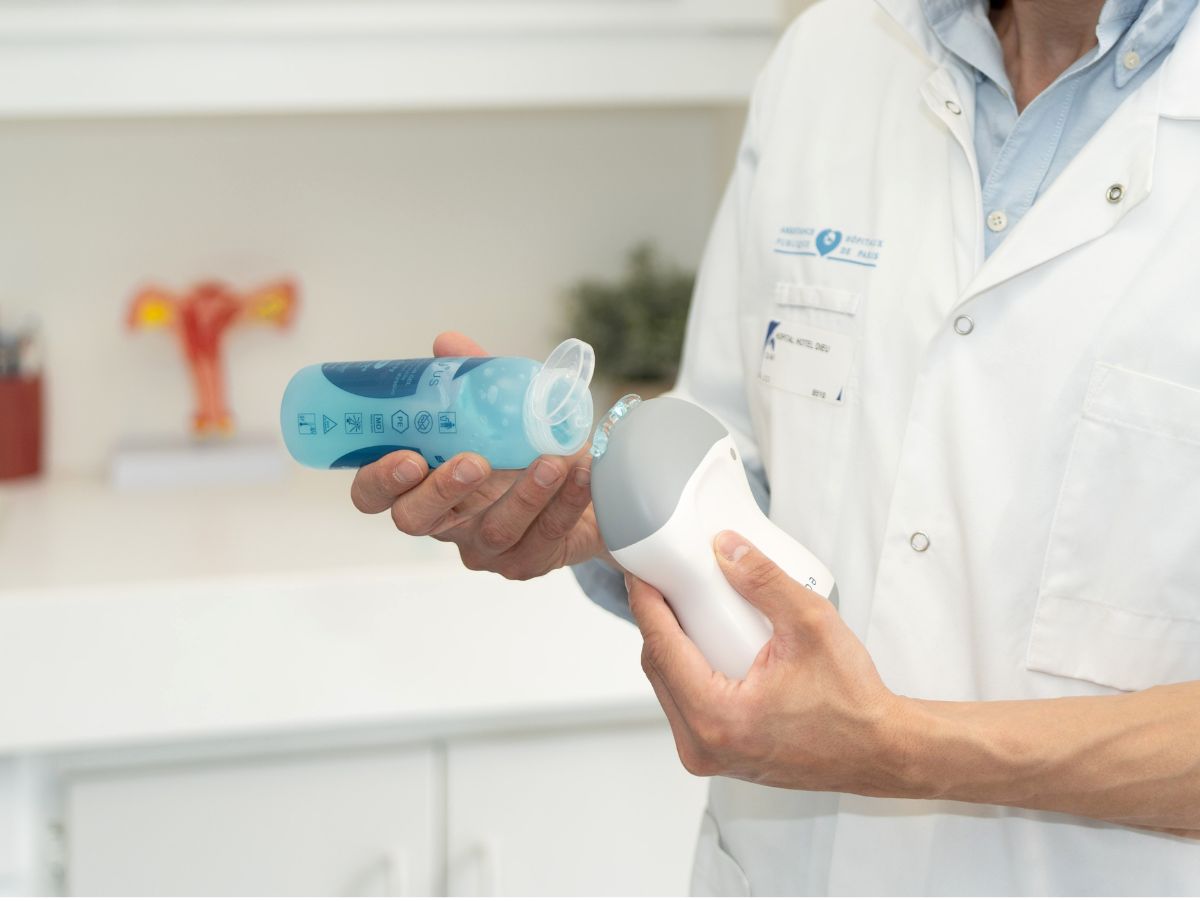
With the advent of increasingly accessible portable ultrasound machines, such as those developed by echOpen, this skill is gradually becoming standard practice in modern medicine.