
Portable ultrasound scanner in 2026: Smarter medical imaging for an evolving healthcare world
How to Choose the Right Portable Ultrasound Machine?
Choosing the right portable ultrasound machine involves matching the device to specific needs: medical specialty, mobility, the patients being examined, and budget. You should then compare image quality, available features, connectivity, cloud capabilities, battery life, warranty, and customer support. A highly advanced device is only worthwhile if its features will actually be used.
In a rapidly changing healthcare system, diagnostic imaging plays a more crucial role than ever , andportable ultrasound machine is at the heart of this transformation. A safe, non-invasive, and increasingly mobile modality, ultrasound has become indispensable in many medical disciplines: obstetrics, emergency medicine, cardiology, veterinary care, and more.
In 2025, ultrasound imaging will see a remarkable convergence of technological innovation, increased accessibility, and artificial intelligence.
This comprehensive guide is intended for clinicians, managers, and decision-makers. It helps you understand the differences between systems and choose the one that best suits your clinical needs, budget constraints, and long-term strategy. Whether you are planning to equip a new technical platform, expand your point-of-care (PoCUS) capabilities, or deploy telemedicine solutions, this guide will help you.
1. How does a portable ultrasound machine work?
An ultrasound machine uses high-frequency sound waves to generate images of the body's internal structures. A probe (or transducer) emits pulses; the echoes are returned according to tissue density and converted into 2D, 3D, or 4D images.
- 2D/B-mode: real-time grayscale cross-sectional images—the basic mode.
- 3D imaging: superimposition of 2D slices to create a volume.
- 4D imaging: adding real-time motion to 3D.
- Advanced modes: Doppler, elastography (tissue stiffness), contrast imaging.
✅ Key benefits:
- No ionizing radiation, therefore safe if used according to the ALARA principle.
- Highly mobile versions, ideal for community care or isolated environments.
2. Categories of ultrasound machines in 2025
A. Fixed ultrasound scanners on carts
Complete wheeled systems with large screens, multiple ports, and advanced processing (color Doppler, elastography, etc.). Used in obstetrics, radiology, cardiology, breast imaging, musculoskeletal imaging, and vascular imaging.
✅ Advantages: exceptional image quality, comprehensive features, adaptable configuration.
❌ Disadvantages: bulky, not very portable, expensive.
B. Portable (compact) ultrasound machines
Laptop or suitcase format (e.g., BMV PT60, BPU series, Mindray cart-lite).
✅ Advantages: lightweight, built-in battery, suitable for transport, good image quality for POCUS, gynecology, MSK.
❌ Disadvantages: fewer probe ports, slightly lower performance than carts.
C. Portable pocket ultrasound devices (ultra-compact)
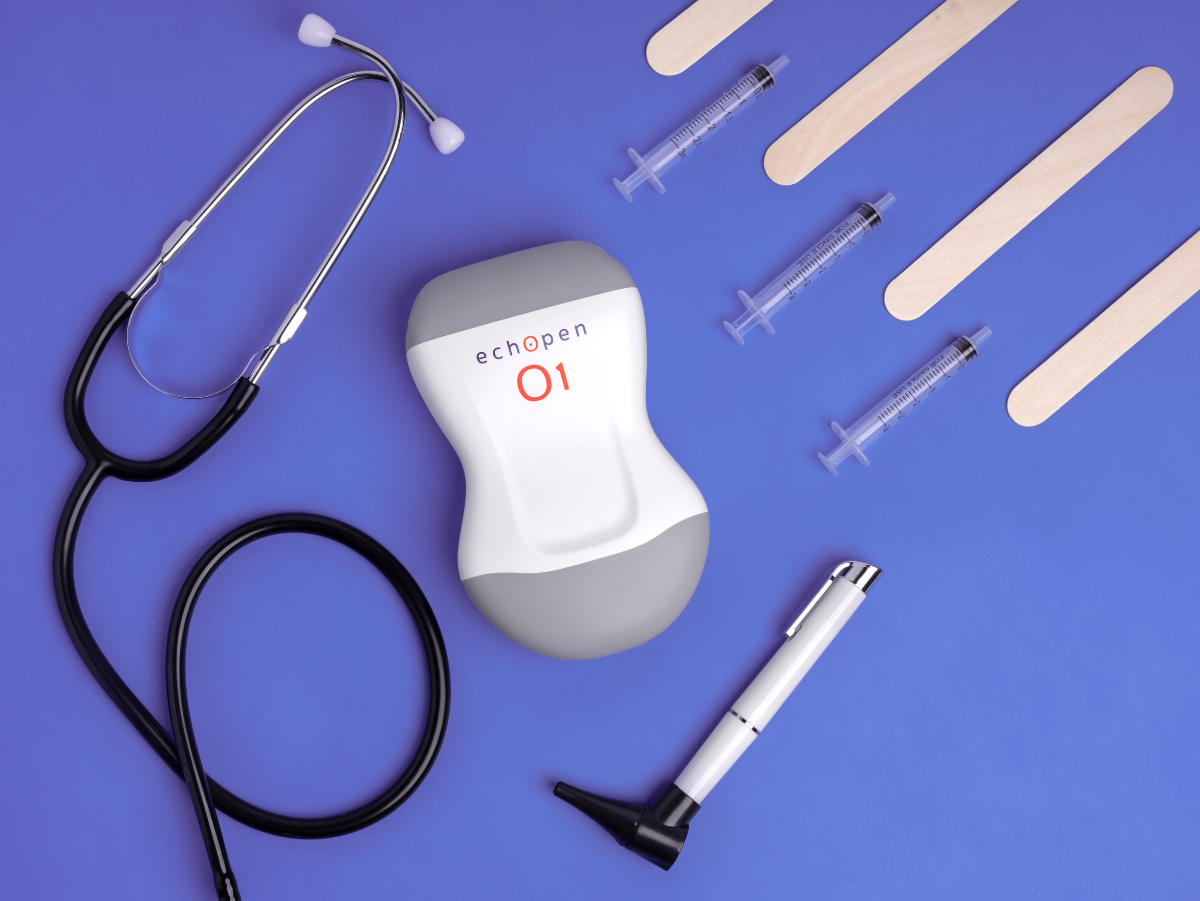
Connected to a smartphone or tablet. Leading examples in 2025: echOpen, GE VScan Air, Butterfly iQ+.
✅ Advantages: ultra-mobile, perfect for emergencies, home visits, and areas with limited medical services. Incorporates AI.
❌ Disadvantages: more limited image quality, battery life, few modes available.
3. Main clinical applications
- Obstetrics/Fetal medicine: high-resolution 3D/4D imaging, dual screens (GE Voluson and successors).
- Cardiology: Doppler echocardiography; recommended carts, portable devices useful in emergencies.
- General imaging: abdominal, MSK, superficial areas — high-frequency probes on cart or portable.
- Vascular/venous access: real-time guidance, PoCUS for IV placement.
- Emergencies / PoCUS: FAST exam, voice assistance, embedded AI.
- Veterinary: same categories with animal presets and appropriate robustness.
4. Choosing the right portable ultrasound machine: 2025 checklist
- Define your needs
Patient volume, specialties involved, need for mobility. - Image quality & performance
Resolution, depth, real-time fluidity. Tested in real-world conditions. - Key features
- AI (automatic measurements, fetal biometrics, cardiac quantification)
- Interface: touchscreen, customizable
- Probes: multifrequency, transvaginal, transesophageal
- Ergonomics: gel warmer, easy cleaning
- AI (automatic measurements, fetal biometrics, cardiac quantification)
DICOM workflow compatibility, EMR/HIS integration, cloud management, battery life, fast startup.- Total Cost of Ownership
Purchase price, warranties, maintenance, software, sensors. Consider refurbished models.
supplier support Training, 24/7 assistance, local technical network.- Flexible financing
Rental, leasing, demonstration, used.
5. Trends and innovations
- AI & smart imaging: beam enhancement, artifact reduction, optimized Doppler.
- Automated measurements: reduced examination time and operator variability.
- Robotic ultrasound: automated or guided systems, particularly in telemedicine.
- New generation 3D/4D: higher frame rates, sharper volumetric rendering.
- Elastography/Contrast: strong growth in liver, thyroid, breast, MSK, vascular.
- Connectivity: cloud, remote interpreting, distance learning.
6. Indicative prices in 2025
7. Quick comparison table
8. Best purchasing practices
- Observe clinical flows to identify actual needs
- Test the models with the relevant team
- Consider hidden costs: training, maintenance, probes
- Anticipate software and hardware updates
- Check warranty coverage and local technical service
9. Outlook for 2026–2030
- AI will further automate repetitive tasks and facilitate diagnostics.
- Telemedicine + robotics will make it possible to cover isolated areas
- Continuing miniaturization: smartphone ultrasound scanners as standard?
- Contrast imaging, elastography, and spectroscopy will enhance noninvasive diagnosis.
In summary
The right portable ultrasound device depends on your clinical priorities, budget, workflows, and future ambitions. Whether for POCUS, obstetrics, cardiology, or veterinary medicine, align your choice with a reliable supplier, solid support, and prospects for growth.
In 2025, ultrasound will become smarter, more mobile, and AI-assisted, integrating into every stage of the care pathway.