
Portable ultrasound scanner or cart: which equipment is right for your clinical practice?
Medical imaging is undergoing a period of profound change, driven by the miniaturization of technology. Today, ultrasound is no longer confined to a dedicated room; it is now available directly at the patient's bedside in the form ofclinical ultrasound.
For healthcare facilities and practitioners, a dilemma arises: should they opt for the stable power of a cart-based ultrasound machine or the flexibility of an ultra-portable probe? The answer depends less on the technology than on your daily use and level of expertise.
The mobile ultrasound machine: the tool for in-depth expertise
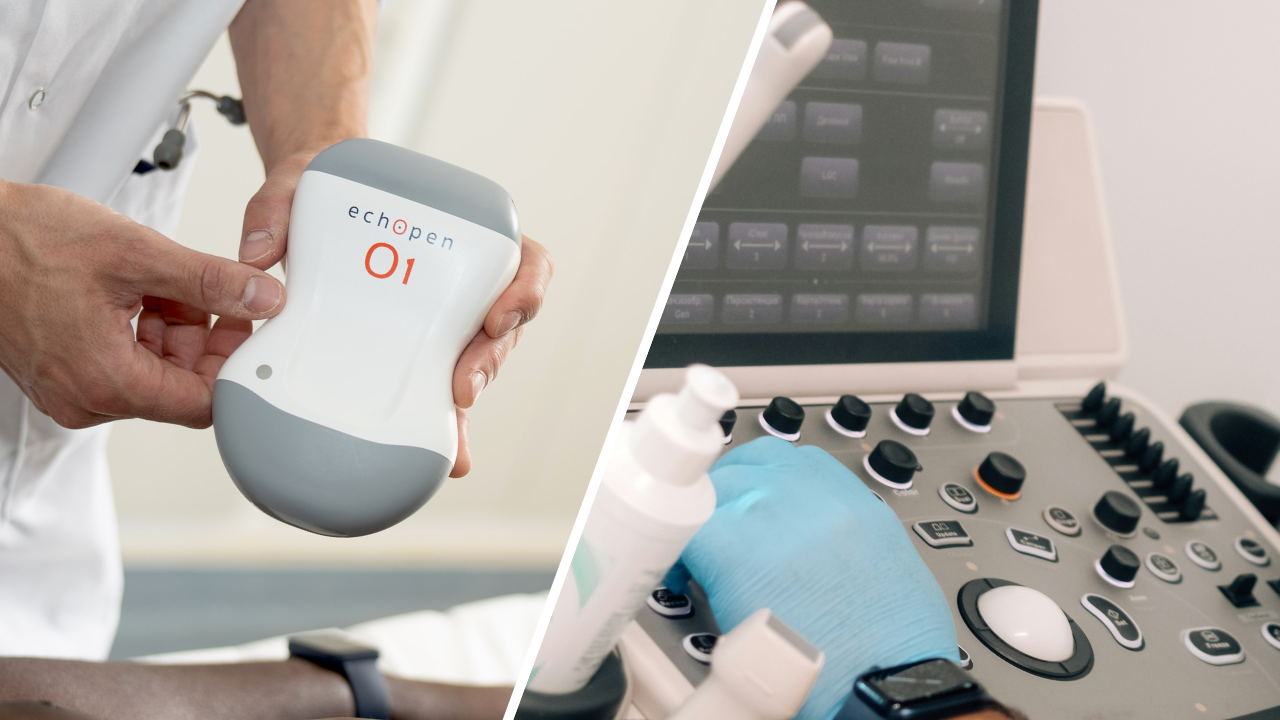
The cart-mounted ultrasound scanner remains the gold standard for examinations requiring comprehensive morphological analysis. It is designed for environments where precision and detail take precedence over speed of movement.
The advantages of the fixed system:
- High resolution and image processing: The processors in the cart-based consoles enable superior readability for complex structures.
- Advanced Doppler modes: For cardiologists or radiologists, pulsed or continuous Doppler functions remain essential for ultra-fine biometric measurements.
- Ease of use: The large screen and physical ergonomics are suited to long imaging sessions, reducing visual fatigue for the specialist.
General medicine: auscultation, the fifth pillar of clinical examination
For general practitioners, ultrasound is changing the paradigm. It is no longer a separate procedure, but an extension of the physical examination, complementing inspection, palpation, percussion, and auscultation. This new pillar,sonography, makes it possible to correct 49.4% of diagnoses during the consultation.
Why choose an ultra-portable device for your office?
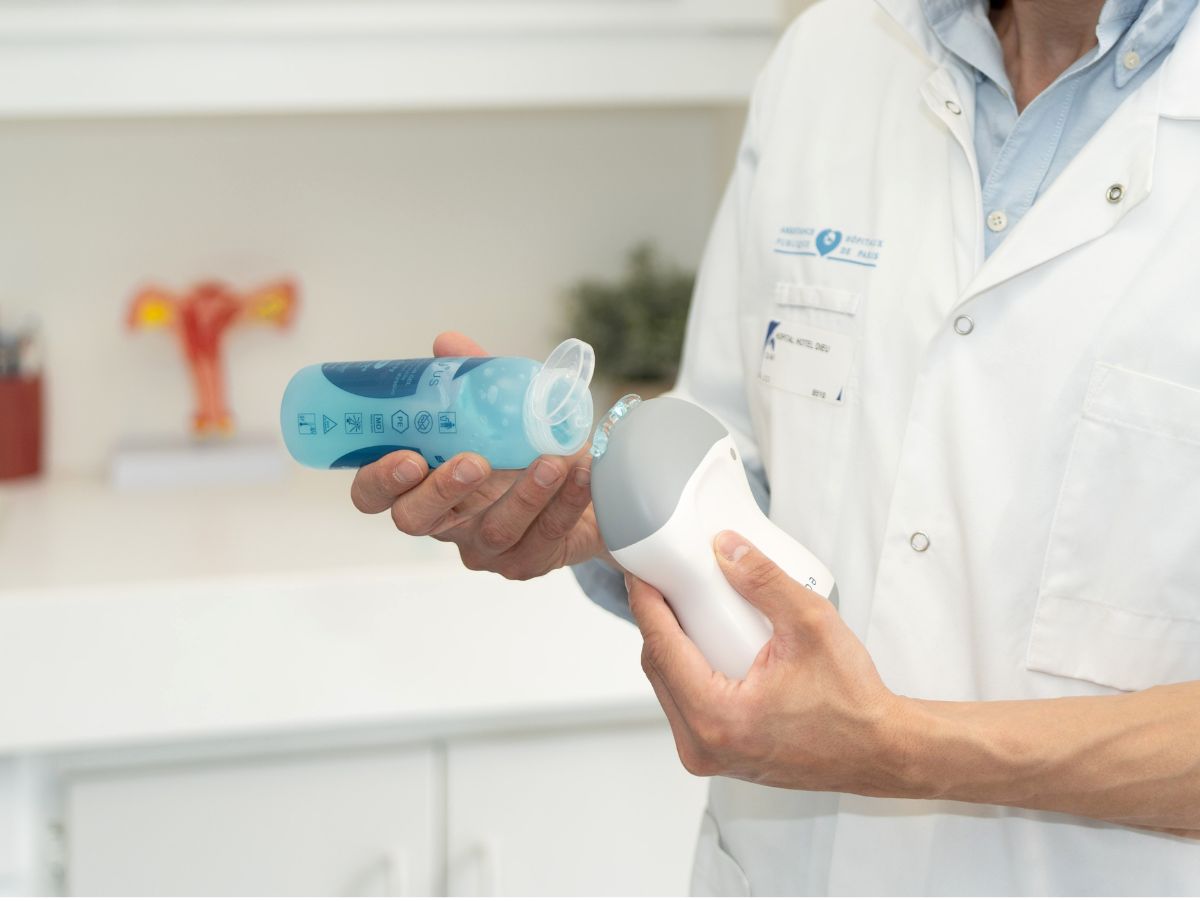
A general practitioner does not usually have access to complex and bulky equipment. A solution such as the echOpen probe meets their need for immediate "certainty."
- Simplicity and accessibility: The exam is taken on a smartphone or tablet, with automatic settings for immediate use.
- Concrete use cases: The tool is ideal for quick actions such as detecting abdominal, pelvic, or chest pain .
- Technical versatility: The probe allows you to switch from an abdominal exam to superficial imaging in a matter of seconds.
Emergencies: the challenge of personal protective equipment
In emergency departments, the issue with trolleys is often related to their availability. Although effective, these machines are often shared between several practitioners or located at the other end of the department.
Ensuring patient bed availability
The future of emergency care lies inthe individualization of equipment. When an emergency physician has their own ultra-portable probe, they are freed from the logistical constraints of the department. Diagnosis (search for effusion, assessment of dyspnea or chest pain) can be initiated instantly without waiting for a machine on a cart to become available. Having this tool constantly available in the practitioner's pocket transforms the responsiveness of initial care.
Comparative summary of uses
Conclusion: A choice dictated by clinical need
In summary, the choice between these two technologies should not be exclusive, but complementary.
- The cart remains the guarantor of expertise for complex assessments requiring maximum computing power.
- The portable ultrasound scanner is an essential tool for community healthcare. Winner of the 2025 Galien Prize, a solution such as the echOpen probe echOpen transforms imaging into a procedure as simple and common as using a stethoscope.
Check outthe echOpen portable ultrasound machine here.