.png)

10 uses of clinical ultrasound in geriatrics: an indispensable tool at the patient's bedside
Clinical ultrasound, or POCUS, is gradually establishing itself as an essential tool in geriatrics. In a specialty where patients often present with atypical symptoms, increased frailty, and high dependency, the ability to obtain immediate imaging at the patient's bedside is profoundly transforming care. Far from being a simple complement, ultrasound is becoming a natural extension of clinical examination. Here's how it fits into the daily practice of geriatricians.
1. Assess acute dyspnea
Dyspnea is one of the most common reasons for hospitalization among elderly patients. Ultrasound can distinguish between acute pulmonary edema, pneumonia, pleural effusion, and COPD exacerbation in a matter of seconds. Complementing clinical examination, which may lack sensitivity and specificity, imaging provides an immediate answer and guides treatment without delay. This ability to quickly distinguish between several potentially serious diagnoses is one of the major advantages of ultrasound in geriatrics.
2. Detect pleural effusion
Pleural effusions occur in elderly patients, whether they are related to heart failure, infection, or tumor pathology. Ultrasound allows them to be visualized directly, their volume to be estimated, and any puncture to be guided under optimal safety conditions. In frail or anticoagulated patients, this precision considerably reduces risks and improves tolerance of the procedure.
3. Assess hydration status
Hydration disorders are very common in geriatrics. Ultrasound provides a dynamic assessment of fluid status by analyzing the inferior vena cava, overall cardiac function, and the possible presence of pulmonary B-lines. This approach allows for fine-tuning of infusions or diuretics, thereby limiting iatrogenic complications.
4. Investigate a fall or trauma
Falls are a frequent and potentially serious occurrence in geriatric care. Ultrasound allows for rapid examination of a painful joint, detection of deep hematoma or effusion, and even suspicion of fracture when X-rays are not immediately available. In nursing homes or at home, this ability to assess trauma on site helps to decide whether transfer to hospital is necessary.
5. Diagnosing urinary retention
Urinary retention is a common but often underdiagnosed problem in older adults. Ultrasound can be used to visualize a distended bladder, measure post-void residual urine, and identify any potential obstructions. This approach avoids unnecessary catheterization, improves patient comfort, and allows for more targeted treatment.
6. Check for deep vein thrombosis
Bedridden patients, those with heart failure, or those with cancer are at high risk of deep vein thrombosis. Compression ultrasound of the femoral and popliteal veins allows for rapid detection of proximal DVT. This ability to confirm or rule out a potentially serious diagnosis at the patient's bedside speeds up treatment and reduces complications.
7. Investigating abdominal pain
Abdominal pain is often atypical in elderly people, making diagnosis difficult. Ultrasound can identify cholecystitis, urinary retention, abdominal aortic aneurysm, signs of peritoneal irritation, or even severe constipation. In just a few minutes, clinicians can obtain essential information that guides treatment and avoids more invasive tests.
8. Detecting decompensated heart failure
Heart failure is one of the most common conditions in geriatrics. Clinical ultrasound allows for rapid assessment of left ventricular function, detection of pericardial effusion, and identification of signs of pulmonary overload. This immediate assessment facilitates treatment adjustment and improves responsiveness to decompensation.
9. Guide technical movements
In elderly patients, technical procedures can be delicate due to skin fragility, muscle atrophy, or anatomical deformities. Ultrasound improves the safety of pleural punctures, ascites punctures, difficult venous access, and joint injections. Real-time guidance reduces complications and increases the accuracy of procedures.
10. Provide close monitoring in nursing homes or at home
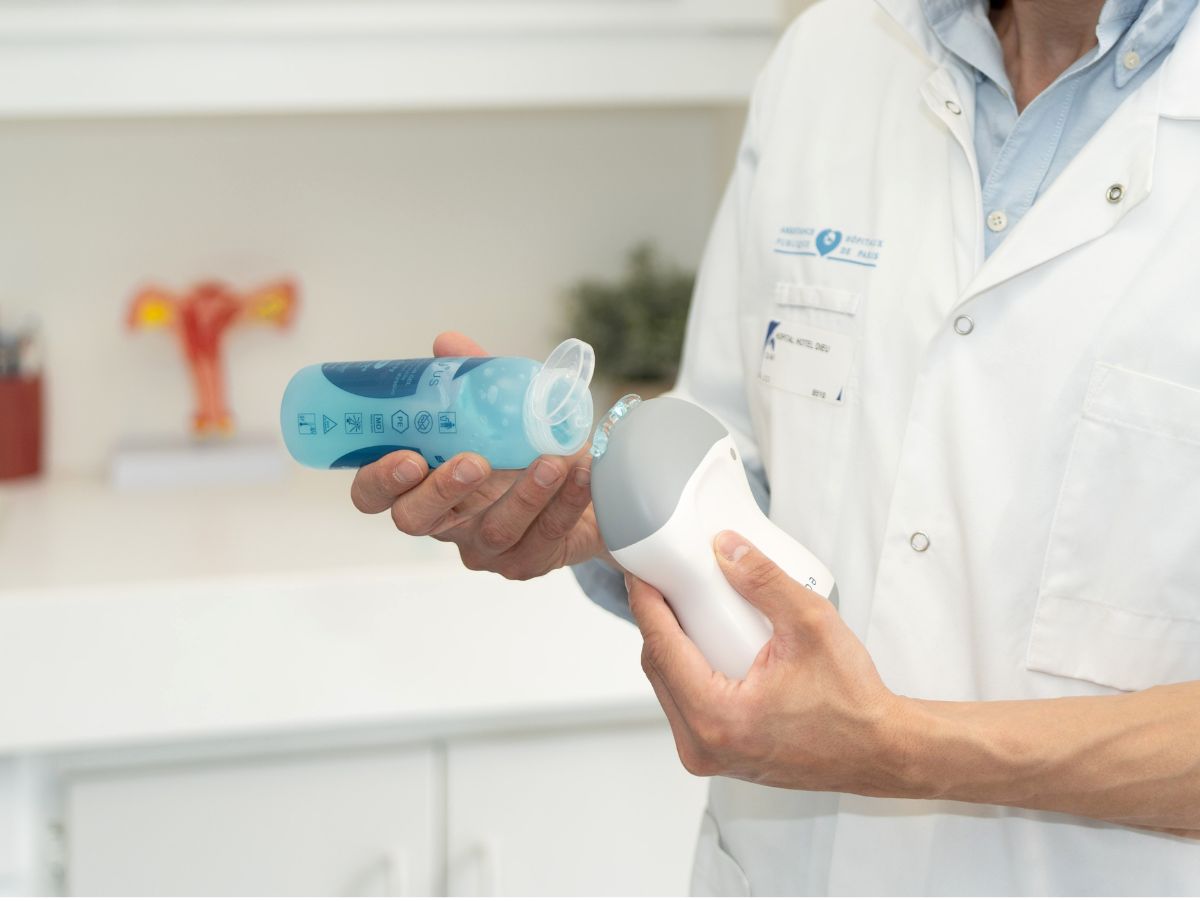
One of the major advantages of POCUS in geriatrics is its portability. In nursing homes or during home visits, it can be used to monitor the progression of pleural effusion, monitor pneumonia, assess hydration, or check on patients with heart failure. This ability to bring imaging to the patient, rather than the other way around, represents a major advance for a population for whom every trip can be a source of stress and complications.
Conclusion
Clinical ultrasound is establishing itself as the stethoscope of the 21st century in geriatrics. It enables faster decisions, fewer invasive examinations, fewer transfers, and an overall improvement in patient safety and comfort. In a context where frailty and clinical complexity are the norm, POCUS offers geriatricians a powerful, accessible, and reassuring tool.
To illustrate these advantages in practice, discover our study on the impact and medical and economic benefits of the echOpen probe for bladder detection in nursing homes.