.png)
Ultra-portable ultrasound for community care: Dr. Sylvie Hebrard shares her experience
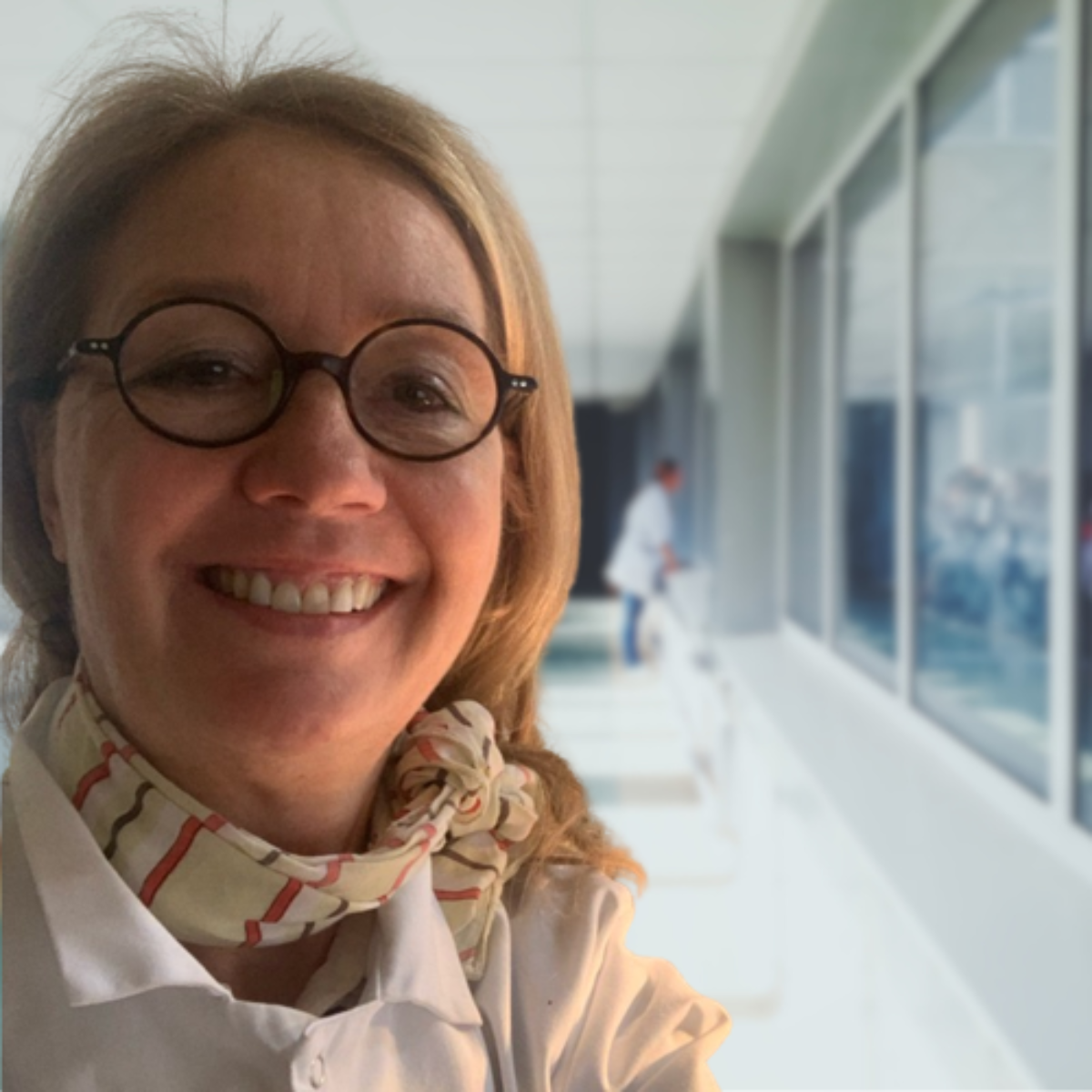
Dr. Sylvie Hebrard, who practiced as a general practitioner for many years in northern Aveyron, now works as a fire department physician in the Massif Central. When her cart-mounted ultrasound machine broke down, she looked for a portable solution that was easy to take into the field. She chose the ultra-portable echOpen ultrasound probe. A few months later, she shares her experience, noting how using it has become second nature in a variety of clinical settings—many of which are demanding.
A tool for addressing specific clinical questions
When practicing in rural areas, even the slightest diagnostic uncertainty can result in a trip lasting several hours. For Dr. Hebrard, the goal is not to replace hospital imaging, but to provide a useful answer on the spot, at the right time.
The conditions she most frequently encounters are typical of community-based primary care: shortness of breath, suspected pleural effusion, ascites, bladder distension, and renal colic. Based on these findings, the echOpen probe allows echOpen to quickly determine the appropriate course of treatment.
“I mainly use it to check the lungs, or to see if there’s fluid in the abdomen. If I’m unsure about something—for example, whether there’s a bladder mass.”
She regularly visits nursing homes or patients in their homes to care for elderly people who require frequent imaging and have limited mobility. In these settings, having an imaging device on hand profoundly changes the way she practices.
An ultrasound available at the time of the exam
According to Dr. Hebrard, what sets the echOpen probe apart echOpen conventional equipment is not just its size. It is its immediate availability.
“It’s quick to turn on, portable—you can carry it with you.”
The probe fits naturally into the course of the consultation, following the physical examination. It does not significantly extend the consultation time, yet it provides crucial information.
“It’s cost-effective because it doesn’t take too much time, and it’s worth the investment given the benefits it provides to the patient in terms of the quality of the examination.”
In rural primary care, the alternative to this immediate assessment may be a long trip, a wait, or a delay in care.
“Going to the hospital for an ultrasound means a two-hour round trip for us.”
In his view, even in urban areas, the delays in accessing imaging data justify the use of such a tool.
Practical support in care
Since acquiring the probe, Dr. Hebrard says he uses ultrasound much more often than he did with his old cart-based equipment. Its portability has changed his practice habits.
“Accessibility is a big plus.”
The probe allowed her to refine diagnoses right on the spot, initiate treatment immediately, and avoid unnecessary referrals. She mentioned that, in one case, she was able to suspect phlebitis thanks to the probe.
Dr. Hebrard takes a pragmatic approach to expectations: the ultra-portable clinical ultrasound scanner is not designed to produce detailed anatomical images. It is intended to answer specific clinical questions.
“In general practice, we don’t need to perform highly detailed anatomical ultrasounds. We’re not looking for minute details.”
He feels the image quality is more than adequate for this purpose.
“The image is more than sufficient for our purposes in general practice.”
A gradual onboarding process, supported by training
Dr. Hebrard has found the My echOpen app echOpen the webinar-style training courses offered by echOpen to be a practical resource for his professional development.
“The online training is great and incredibly helpful for day-to-day work.”
She trains regularly, including at home to practice her techniques, and participates in ultrasound workshops. She notes that interpreting images is something one picks up relatively quickly, and expresses a desire to further develop her hands-on skills. She would be willing to travel to Paris to participate in an in-person workshop in a small group.
A probe that supports doctors in the field over the long term
Her satisfaction stems from a simple belief: the tool does exactly what she asked it to do.
“It’s exactly what I was looking for.”
She also appreciates the relationship with the echOpen team, which she describes as attentive and eager to take user feedback into account.
Now retired, she plans to use the echOpen probe echOpen her work as a firefighter. She sees this ultra-portable ultrasound device as a tool that will serve her well for many years to come.
“As a firefighter-paramedic, echOpen am excited about the echOpen probe and the services it will enable me to provide to the people in my community.”

.png)
.png)