Portable ultrasound scanners: why you should get one, how to choose, and what the echOpen ultrasound scanner changes
The ultraportable ultrasound scanner has emerged as one of the most transformative tools in modern clinical practice. Since it literally fits in a lab coat pocket, it allows imaging to be integrated into the very heart of the physical examination. This major development, driven by the rise of POCUS (Point-of-Care Ultrasound), is redefining how healthcare providers assess, diagnose, and monitor their patients. Far from being a mere technological gadget, the ultraportable ultrasound device is becoming a clinical reflex, a decision-making tool, and a catalyst for continuing education.
Why invest in a portable ultrasound machine?
The main advantage of an ultra-portable ultrasound scanner is its ability to provide immediate imaging, precisely when the clinician needs it. Whether in consultation, in the emergency room, on a home visit, or in an outpatient setting, it allows you to move from a clinical hypothesis to a concrete visualization in a matter of seconds. This immediacy improves diagnostic accuracy, reduces uncertainty, and speeds up treatment decisions. In a context where hospital workflows are strained and outpatient medicine is growing, having an instant imaging tool becomes a decisive advantage.
Ultraportability also responds to new ways of practicing medicine. Healthcare professionals are increasingly mobile, working in a variety of environments and often having to make quick decisions without immediate access to technical facilities. Ultraportable ultrasound devices support this mobility. They also enhance continuing education: the more a practitioner scans, the more they progress. Having a device always at hand encourages regular learning, consolidation of reference points, and the natural integration of ultrasound into the clinical routine.
Why having your own ultrasound probe changes everything
Having your own ultrasound probe profoundly transforms practice. The tool becomes available at any time, without having to depend on an ultrasound room schedule or a device shared between several teams. Clinicians can configure their own settings, presets, and acquisition habits, which streamlines use and builds confidence in the tool.
A personal probe is also a powerful tool for accelerating skill development. Repeating the same movements, even over very short periods of time, allows users to acquire a level of proficiency that is not possible with institutional devices, which are often overloaded. Practitioners can review their images, analyze their findings, compare their interpretations, and progress at their own pace. This autonomy promotes rapid and lasting skill development.
Finally, a personal probe improves the patient relationship. Showing images live, explaining what you see, and sharing clinical reasoning reinforces education and trust. Ultrasound becomes a communication tool as much as a diagnostic tool.
What types of portable ultrasound machines are available?
The market for ultra-portable ultrasound scanners has become considerably more diverse. First, there are wired probes that connect to a smartphone or tablet. These use the phone's computing power and offer excellent value for money. Their software updates are simple, and their integration with mobile devices makes it easy to share images.
Wireless probes are another category. They communicate via Wi-Fi or Bluetooth and offer great freedom of movement. Their ergonomics appeal to many users, although their battery life and connection stability must be taken into account.
Finally, some manufacturers offer ultraportable all-in-one systems, which are closer to traditional consoles but in a compact format. They are often more expensive, but can meet specific needs in terms of ergonomics or image quality.
Which portable ultrasound machine should you choose depending on its use?
The choice depends primarily on the clinical context. In general medicine or primary care, a versatile, easy-to-use device capable of answering common questions (abdomen, lungs, bladder, basic cardiac POCUS) is generally sufficient. In emergency rooms or intensive care units, the priority is robustness, quick start-up, and the ability to provide usable images in difficult conditions. In specialized fields, the choice is made according to the organs being examined: liver and bile ducts in hepatology and gastroenterology, heart in cardiology, uterus and pregnancy in gynecology and obstetrics, etc.
Integration into existing workflows can also influence the choice: compatibility with patient records, image export, archiving, sharing between teams. Finally, budget remains a determining factor, particularly for private practitioners or organizations with limited resources.
The Benefits of Ultrasound echOpen
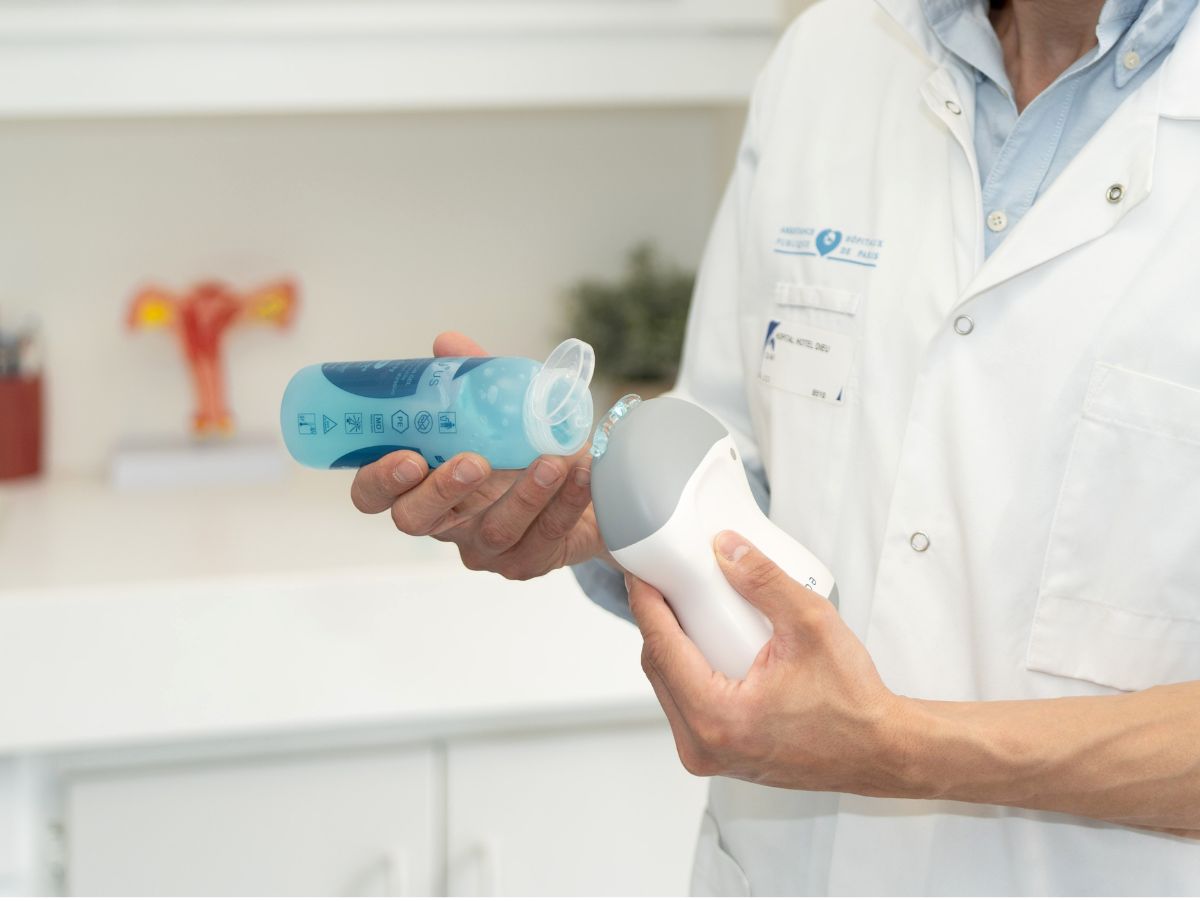
echOpen ’s ultrasound device stands out for its unique approach: making clinical ultrasound truly accessible and tailored to real-world needs. Designed to fit in a lab coat pocket, it accompanies healthcare providers everywhere—whether in the office or on the go.
echOpen It is also intended to serve as a catalyst for democratization. Its affordable cost allows a greater number of healthcare providers to acquire a personal probe, paving the way for the widespread adoption of POCUS, including in settings where ultrasound was previously rare or inaccessible. This accessibility has a direct impact on the quality of care, particularly in underserved areas or low-resource settings.
Finally, the echOpen ultrasound scanner is designed as an educational tool. Its ease of use and ultra-portability make it an ideal resource for both initial and continuing education. Students, residents, and young practitioners can gain experience with a wide range of cases, practice regularly, and integrate ultrasound into their clinical reasoning from the very start of their careers.