In Outpatient Pediatrics, Clinical Ultrasound as a Tool for Respiratory Assessment
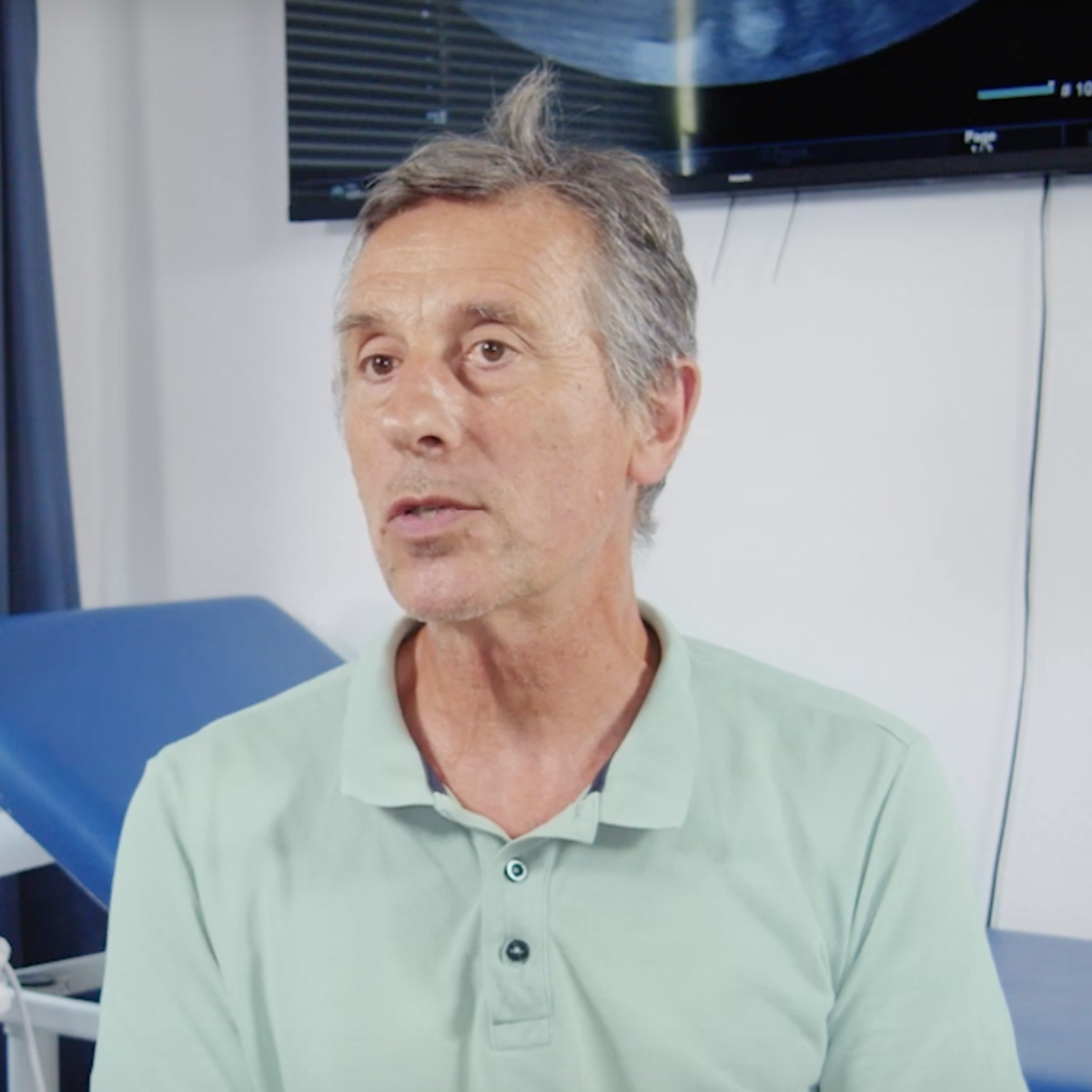
According to Dr. Christophe Batard, a pediatrician in Vincennes and a member of the French Association of Ambulatory Pediatrics, clinical ultrasound is not intended to turn a private practice pediatrician into an ultrasound technician. Its value lies elsewhere: in providing additional, readily accessible information in certain everyday situations.
In his practice, he focuses particularly on pulmonary ultrasound, which complements the clinical examination and other tools already integrated into his practice, such as biomarker tests performed using microassay methods. The goal is clear: to better guide the care of certain children with coughs, especially when it is necessary to distinguish a routine condition from one that may suggest pneumonia or a pleural effusion.
"I need a tool to help me figure things out."
A tool designed to complement the clinical examination
Dr. Batard emphasizes a key point: clinical ultrasound must remain a tool to aid in decision-making. It is not a substitute for specialized expertise or for diagnostic imaging when it is necessary.
He compares its use to other screening tools already in use in pediatricians’ offices. With a photoscreener, for example, a pediatrician can identify a vision problem and refer the child to an ophthalmologist, without prescribing glasses himself. According to him, lung ultrasound follows the same logic.
"We aren't trained in ultrasound. For us, it's just another tool."
In practice, therefore, the goal is not to look for complex signs, but to learn to recognize simple situations that are useful in clinical practice: an image suggestive of infection, a pleural effusion, air or fluid in the pleural space, pneumonia, a mass, or an abscess—whenever these findings can guide the course of action.
Why echOpen Be a Valuable Tool in a Pediatric Practice
The decisionechOpen by very practical considerations: portability, space requirements, and the need to continue advancing in pulmonary ultrasound. In a private practice, every square meter counts. Dr. Batard explains that he does not have the space needed to set up an ultrasound machine on a cart.
The advantage of a portable ultrasound machine, therefore, lies in its compact size and immediate availability.
"My probe is in my drawer. I take it out and use it right away."
This portability reflects his vision of the practice of the future: a practice equipped with simple, useful tools capable of enhancing the examination without complicating operations. In line with this approach, echOpen presented as yet another device to install, but as a tool that can be used the moment a clinical question arises.
Progress Through Practice and Training
Dr. Batard’s assessment is deliberately nuanced. He sees real value in pulmonary ultrasound in outpatient pediatrics, but points out that confidence comes with practice.
"We do well what we do often."
He feels he still doesn’t use the probe often enough to feel completely comfortable with it—according to him, he performs about two or three pulmonary ultrasounds per month. This isn’t a major technical obstacle, but rather a matter of gaining experience: the more the tool is used, the more natural it becomes to use it during consultations.
For him, training is therefore crucial. General webinars can be useful, but he expresses a need for more targeted content: material tailored to pediatricians, focusing on simple scenarios, typical images, catheter placement, and specific pediatric cases.
"It definitely comes down to training."
In particular, he suggests short, accessible videos featuring recorded examples and clinical cases. In his view, this type of content could help doctors make the transition from purchasing the probe to using it regularly.
Tailor the assessment to the child's specific needs
Dr. Batard also mentions the specific challenges involved in examining children. With very young children, the logistics can be more complicated: the child moves, cries, and sometimes struggles, and the size of the probe may not be well-suited for very small children.
However, he shares strategies drawn from pediatric practice: placing the child in the parents’ arms, creating a reassuring environment, using distractions, and capturing the child’s attention with lights or objects—just as one would during a vaccination or a difficult clinical examination.
These points serve as a reminder that clinical ultrasound in pediatrics requires a specific approach—one that differs from that used in adults—and that it benefits from being supported by tailored training materials.
What this feedback shows
Beyond its personal use, Dr. Batard sees a benefit for the community as a whole. He mentions the French Association of Ambulatory Pediatrics, which he says comprises about 1,200 to 1,300 pediatricians, and emphasizes that this community is interested in tools that are useful in the clinic.
His practice also employs several interns and two locum physicians. He also mentions that pediatric pulmonologists in training, who are interested in this type of tool, regularly visit the practice. For echOpen, this opens up an important avenue: supporting not only established practitioners but also physicians in training in the judicious use of clinical ultrasound.
This feedback thus reveals a clear expectation: tools that are simple, mobile, and suited to the field—but above all, accompanied by practical training. In outpatient pediatrics, the goal is not to make consultations more complicated, but to provide clinicians with additional support at the right time.

.png)

.png)
.png)