.png)
Ultra-portable Ultrasound in Rehabilitation Centers: Providing Clinical Answers On-Site, Immediately
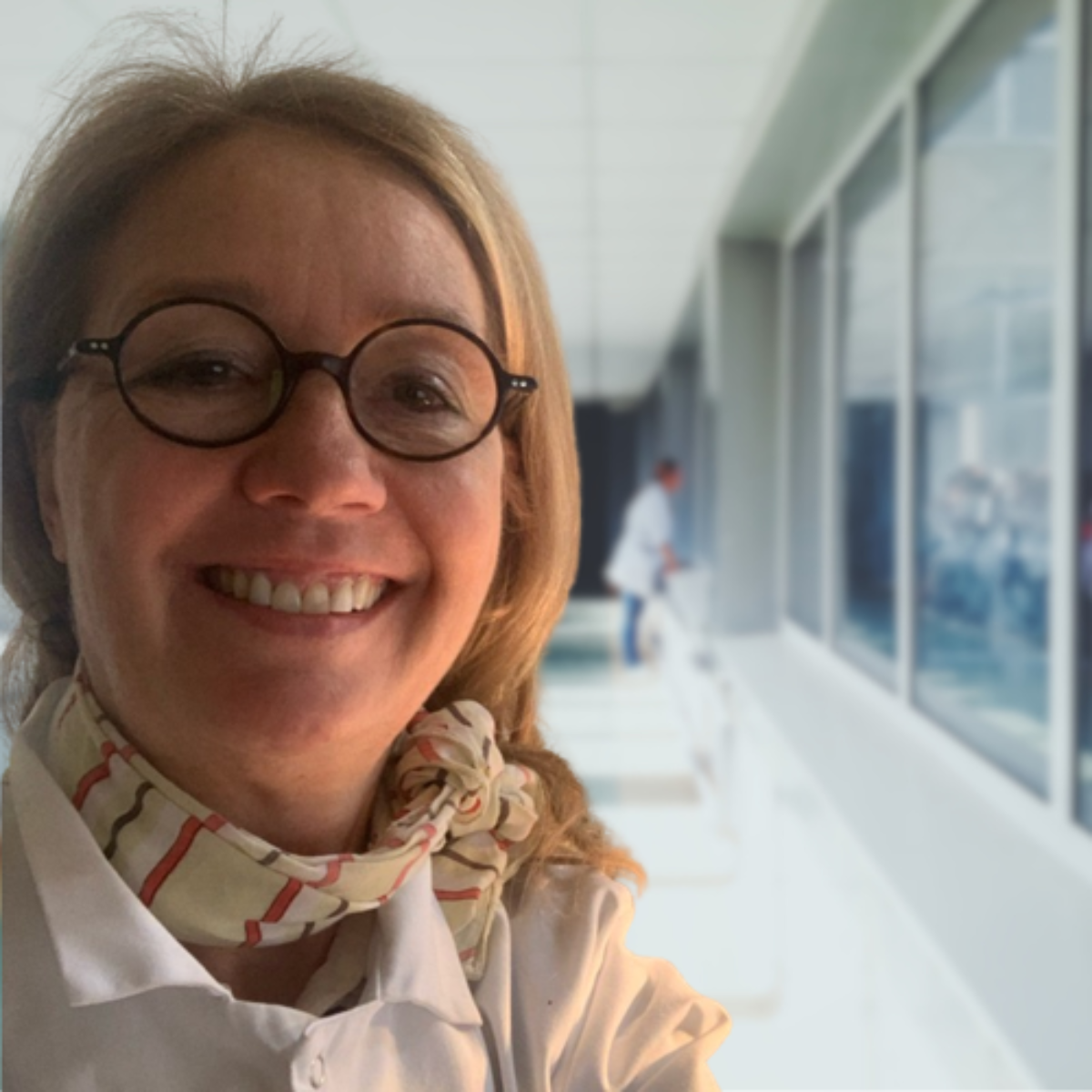
Dr. Martha Bousquet works at a rehabilitation center and also sees patients in the emergency room. Her daily work involves hands-on clinical care, working with patients who are often frail, for whom transport to an imaging facility poses a real challenge—and is sometimes risky.
It is in this context that the John Bost Foundation has equipped its doctors with the echOpen probe, along with initial training provided on-site by theechOpen teams. This testimonial illustrates how an ultra-portable device can be seamlessly integrated into clinical practice, even for a doctor with no prior experience in ultrasound.
Equipment provided by the Foundation; training provided by echOpen
Before using the echOpen probe, Dr. Bousquet had no training in ultrasound. The John Bost Foundation took the initiative to provide the equipment for the facility’s doctors.
This institutional decision is based on a clear rationale: in a rehabilitation center, patients often have significant mobility limitations. Transporting them for a conventional imaging exam requires extensive coordination—sometimes by ambulance or wheelchair—with the associated challenges for both the patient and the healthcare staff.
The initial training was provided directly by echOpen teams over two days at the facility. For Dr. Bousquet, this support was crucial; he emphasized that the onboarding process was built from the ground up within a structured framework.
This point is worth emphasizing: incorporating clinical ultrasound into a physician’s practice without prior experience is not a matter of improvisation. It requires a solid educational foundation, which the echOpen training program echOpen provided.
A practice rooted in the clinical thinking of the time
Once she had completed her training, Dr. Bousquet incorporated the echOpen probe echOpen her practice in a pragmatic way. Its use is neither systematic nor ritualized: she uses it as needed during consultations, in response to a specific clinical question that arises in the moment.
"It depends on the patient's condition and needs. At that point, I decide whether or not to perform an ultrasound. Only if it will be helpful."
This approach reflects what ultra-portable clinical ultrasound truly enables: not to replace conventional imaging, but to provide an immediate answer to a question that, without this tool, would remain unresolved until a later examination or would require the patient to be transferred.
"When I have a question that only an ultrasound can answer, it saves me from having to send a patient to the emergency room or helps confirm a diagnosis."
The goal here is not to replace the imaging process, but to use it in a more relevant and targeted way, by relying on an initial assessment available at the time of the consultation.
Avoiding Unnecessary Transfers for Frail Patients
It is on this point that Dr. Bousquet’s testimony takes on its full significance. In a rehabilitation center, the patient population is unique: people with limited mobility who sometimes require medical transportation for any examination outside the facility.
"To avoid transferring patients who are already physically compromised."
This sentence sums up what she echOpen expected from the echOpen probe.The echOpen portable ultrasound device makes it possible to conduct an initial on-site evaluation, confirm or rule out a clinical hypothesis, and make a more informed decision about whether a transfer to an emergency department or an imaging center is truly necessary.
Continuing Education as a Driver of Progress
Dr. Bousquet also participated in the clinical ultrasound staff meetings offered by echOpen, a series of online continuing education sessions that allow users to view clinical cases performed using the echOpen probe.
"Yes, that's interesting."
These guides are a valuable resource for users who wish to improve and refine their ability to interpret images. They also serve a specific educational purpose: to demonstrate what the echOpen probe echOpen capable of achieving in the hands of experienced physicians, even in complex clinical cases.
Dr. Bousquet explains this candidly: certain surgical procedures—particularly those involving the heart or the musculoskeletal system—require a level of skill that is acquired gradually.
"It's frustrating sometimes to want to see an image and not be able to see it."
But she immediately adds, “You can’t have it all.” This nuance captures the essence of what an ultra-portable ultrasound machine is: a powerful tool within its scope, one that doesn’t claim to rival specialized radiology equipment, but which provides real clinical value for the questions it can answer.
What this feedback shows
Dr. Bousquet’s account reflects the reality of clinical practice, which faces concrete organizational constraints and has found echOpen suitable solution in the echOpen probe. It is not a one-size-fits-all solution, nor is it a substitute for specialized imaging, but rather a frontline tool that answers the right question at the right time and avoids the transfer of vulnerable patients when circumstances permit.
This feedback highlights a user profile that is rarely mentioned in standard discussions of clinical ultrasound: the physical medicine and rehabilitation physician, who has no prior training in ultrasound but integrates the tool into daily, multidisciplinary practice through structured guidance.
It demonstrates that clinical ultrasound provides the user with yet another tool for addressing clinical questions, with all that this entails in terms of rigor, gradual experience, and careful case selection. This is precisely echOpen goal echOpen to make clinical ultrasound accessible, useful, and an integral part of everyday patient care.

.png)
.png)