In hepatobiliary surgery, bedside ultrasound can facilitate postoperative monitoring
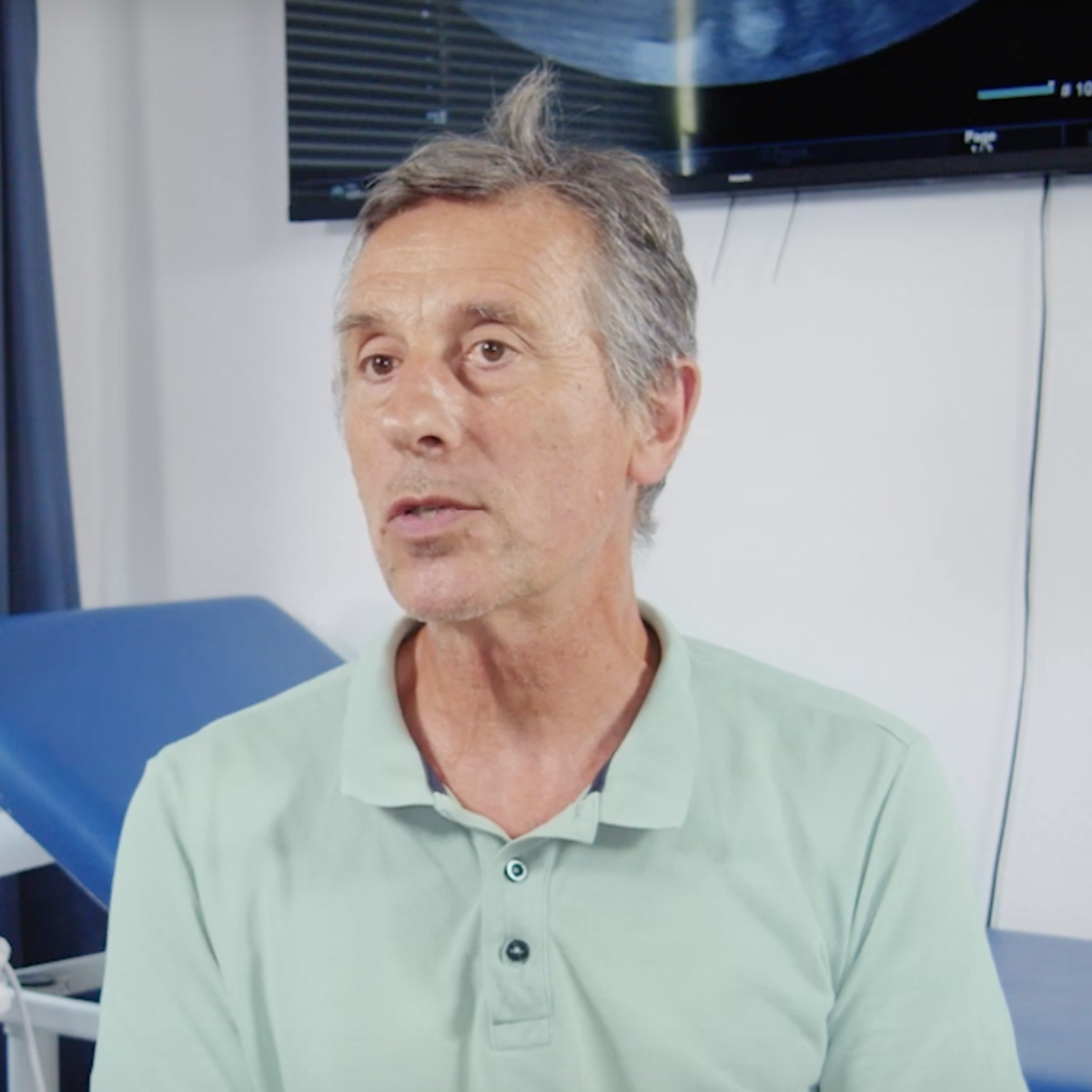
For Dr. Pio Corleone, a surgeon who received training in ultrasound during his career in Italy, the value of clinical ultrasound lies primarily in its ability to quickly answer a simple question at just the right moment.
In hepatobiliary surgery, particularly during the postoperative period, the goal is not always to perform a comprehensive examination. Often, the goal is to verify a clinical hypothesis: Is there a collection? Has a pleural effusion worsened? Should a puncture be considered? The echOpen probe is designed precisely for this type of targeted use, right at the patient’s bedside.
Provide a quick answer to a specific clinical question
In the postoperative period, some patients may develop a fever, a decline in general condition, or elevated levels of inflammatory markers. In this context, Dr. Corleone explains the benefits of being able to conduct an initial assessment directly on the ward.
"You can do it at the patient's bedside. It takes 10 minutes, a quarter of an hour, or even half an hour if you want, but you can do it every day whenever you want."
The example he cites is that of fluid accumulation in the hepatic lobe following liver surgery. In such cases, ultrasound helps guide clinical decision-making: monitoring the patient for a few days, considering a paracentesis, or arranging for drainage if necessary.
This availability changes our relationship with time. Without an immediately accessible tool, one must submit a request, contact the radiologist, wait for an opening, and then schedule the exam or procedure if necessary. According to Dr. Corleone, this wait can prolong the time it takes to provide care, particularly when the situation requires a rapid response.
An ultrasound available during the visit
What stands out most to Dr. Corleone about the echOpen probe is its convenience. In a hospital ward, a cart-mounted ultrasound machine can provide very high-quality images, but it’s more cumbersome to set up on a daily basis.
With an ultra-portable probe, the exam can be integrated more naturally into the ward's daily routine.
"You can stop by in the morning—even during the tour—and watch it live."
This approach is particularly useful for postoperative monitoring. After major liver surgery, the physician may look for an abdominal collection or a reactive pleural effusion. If a pleural effusion is already known to be present, ultrasound can help determine whether it has increased in size. In certain situations, ultrasound can also help ensure the safety of a procedure, such as an ultrasound-guided ascites tap.
For Dr. Corleone, the benefit is therefore both clinical and practical: having a tool that can be used immediately to answer a specific question.
One image is enough for the right use cases
Dr. Corleone’s testimony is clear regarding the scope of use. The echOpen probe echOpen intended to replace all imaging exams or more comprehensive ultrasound machines in situations where they are required. It is best suited for addressing a specific clinical question using a simple, readily available tool.
"You don't need the precision of a high-powered ultrasound. It's really enough just to see what you need to see."
In the examples he describes, the goal is, in particular, to distinguish a fluid structure from a mass, to search for a collection, to objectify an outpouring, or to help prepare for an action. For these purposes, he considers the image quality to be adequate.
This approach echoes a central tenet of clinical ultrasound: the tool is most valuable when used in a specific context by a practitioner who knows what question they are trying to answer.
A practical tool for training residents in clinical ultrasound
Beyond its personal use, Dr. Corleone also sees educational value in it. In his view, the probe can help residents incorporate ultrasound into their clinical reasoning at an earlier stage.
"It can be a big help to residents—and to everyone. It can be much faster, even for diagnosis, without having to wait for a CT scan or the radiologist."
He emphasizes, however, the need to encourage this practice. The challenge is not just to make the tool available, but to encourage teams to use it, practice with it, and incorporate it into their clinical routine.
His own career path illustrates this well: he was first introduced to ultrasound by a hepatobiliary surgeon who used it regularly in the perioperative setting. This repeated exposure helped make ultrasound a natural tool in his practice. This is also why access to clinical ultrasound training materials is so valuable for supporting the professional development of teams.
Portability as the Real Difference
When asked what sets echOpen apart echOpen cart-mounted ultrasound machine, Dr. Corleone does not question the quality of more traditional equipment. For him, the difference lies elsewhere: in immediate accessibility.
“As for the cart-mounted ultrasound machine, you have to admit it’s still a good machine. The most important point, in my opinion, isechOpen much more convenient than the cart. That’s the whole difference, in my view.”
This practicality is at the heart of the feedback received. A lightweight probe, readily available on the ward, can be used more easily as soon as a clinical question arises. While it does not replace specialized tests, it enhances the clinical examination and helps guide the next steps in patient care more quickly.
A tool to incorporate into daily clinical practice
Dr. Corleone’s testimony highlights the value of an ultra-portable clinical ultrasound system in a demanding hospital setting, where decisions often must be made quickly and as close to the patient as possible.
In practice, the echOpen probe echOpen a simple need: to have a practical tool that is powerful enough for targeted assessments and can be used right at the patient's bedside.
His experience illustrates a potential role for ultra-portable clinical ultrasound: not to replace specialized tests, but to supplement the clinical examination when a physician is seeking a quick answer to a specific question.

.png)
.png)
.png)